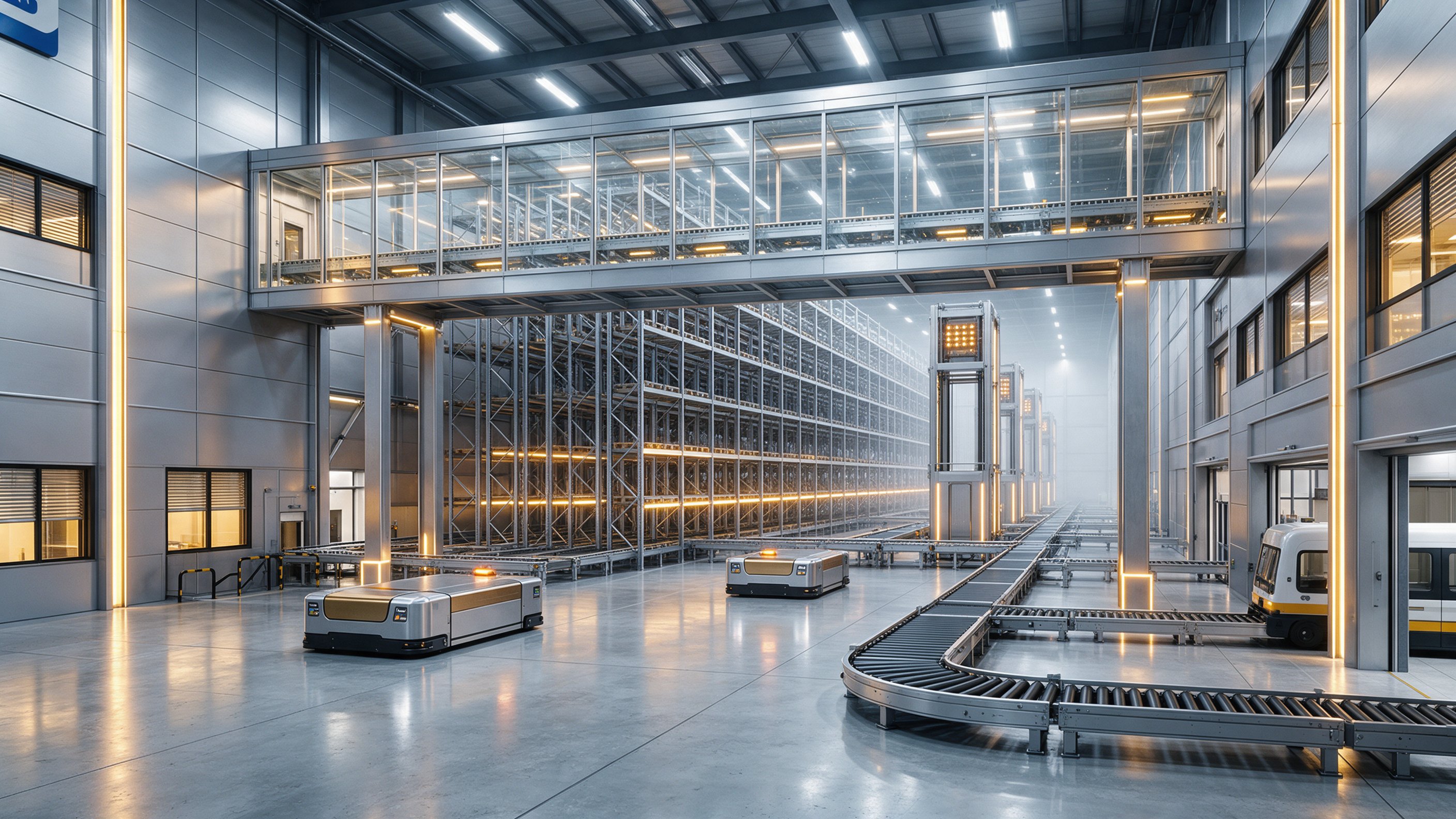
Papastratos, a Greek manufacturing company that also operates as a key production hub for Philip Morris International (PMI), has commissioned Toyota Automated Logistics (TAL) to design, provide and install a comprehensive automated intralogistics solution.
The scope combines full warehouse automation with a set of integrated systems. Its centrepiece is a fully automated, high-density pallet warehouse based on 4-Way Shuttle Technology, working alongside conventional racking supplied by Toyota Material Handling Greece.
The installation will also cover automated conveyor systems and vertical lifts, as well as a bridge connection between buildings that is designed to allow automated pallet transport across the entire facility.
Planned material flow
Once completed, the integrated solution is intended to manage automated storage and movement of raw materials, semi-finished products and finished goods. According to the company, this should keep material flow efficient and reliable through the manufacturing process while giving Papastratos a high degree of operational flexibility.
The project was developed in close cooperation between Papastratos, PMI's central engineering and project teams, Toyota Automated Logistics and Toyota Material Handling Greece.
Thomas Hibinger, CEO of Toyota Automated Logistics for EMEA and APAC, said the project connects automated storage and material transport with Papastratos' manufacturing operations. He said it is meant to help the company improve operational processes, gain greater control and make better-informed operational decisions, with support for continuous optimisation after go-live, and to help keep manufacturing in Aspropyrgos competitive and prepared for future requirements.