Solar Mounts LLC, a Michigan-based designer and manufacturer of commercial and utility-scale solar mounting systems, is urging Michigan and the wider PJM Interconnection region to add generation and storage faster after a federal emergency order. In a sponsored commentary, company team member and Michigan resident Terence Parker said the U.S. Department of Energy’s Oct. 12, 2026, order should be treated as a warning rather than a one-off.
The order, effective Oct. 13–16, directs PJM to use additional generating resources. It authorizes specified power plants to operate as needed for reliability and allows backup generators at large facilities to help reduce grid demand during emergencies. Parker wrote that the order does not mean blackouts are inevitable, but it highlights serious challenges and the need to add capacity before emergency measures become routine.
Capacity prices and reliability pressure
Parker pointed to PJM’s capacity auctions as evidence of tightening supply. Prices reached $329.17 per megawatt-day for the 2026–2027 delivery year and $333.44 for 2027–2028, with the latter auction falling short of PJM’s stated reliability requirement. Capacity costs are only one component of electricity bills, he wrote, but rising prices signal growing pressure on consumers.
The order also permits designated generating units to exceed specified operating limits when necessary for reliability and authorizes PJM to direct backup generation at data centers and other large facilities, potentially including diesel generators as a last resort. Parker said running fossil-fuel plants more often can increase emissions, depending on the units involved, while diesel generators can worsen local noise pollution and expose operators to high diesel prices. If such measures become common, he argued, the region should ask why cleaner generation and storage are not coming online faster.
Weather and planning uncertainty
The commentary also cited NOAA’s Oct. 15, 2026, winter outlook, which anticipates warmer-than-average conditions across much of the northern United States, including the Midwest, influenced by a strong El Niño. Parker cautioned that seasonal forecasts cannot predict every period of extreme demand. Aging infrastructure, maintenance, changing weather and growing electricity consumption reinforce the need for advance planning, and temporary authority to run additional fossil-fuel resources cannot replace long-term investment, he wrote.
Solar, storage and interconnection
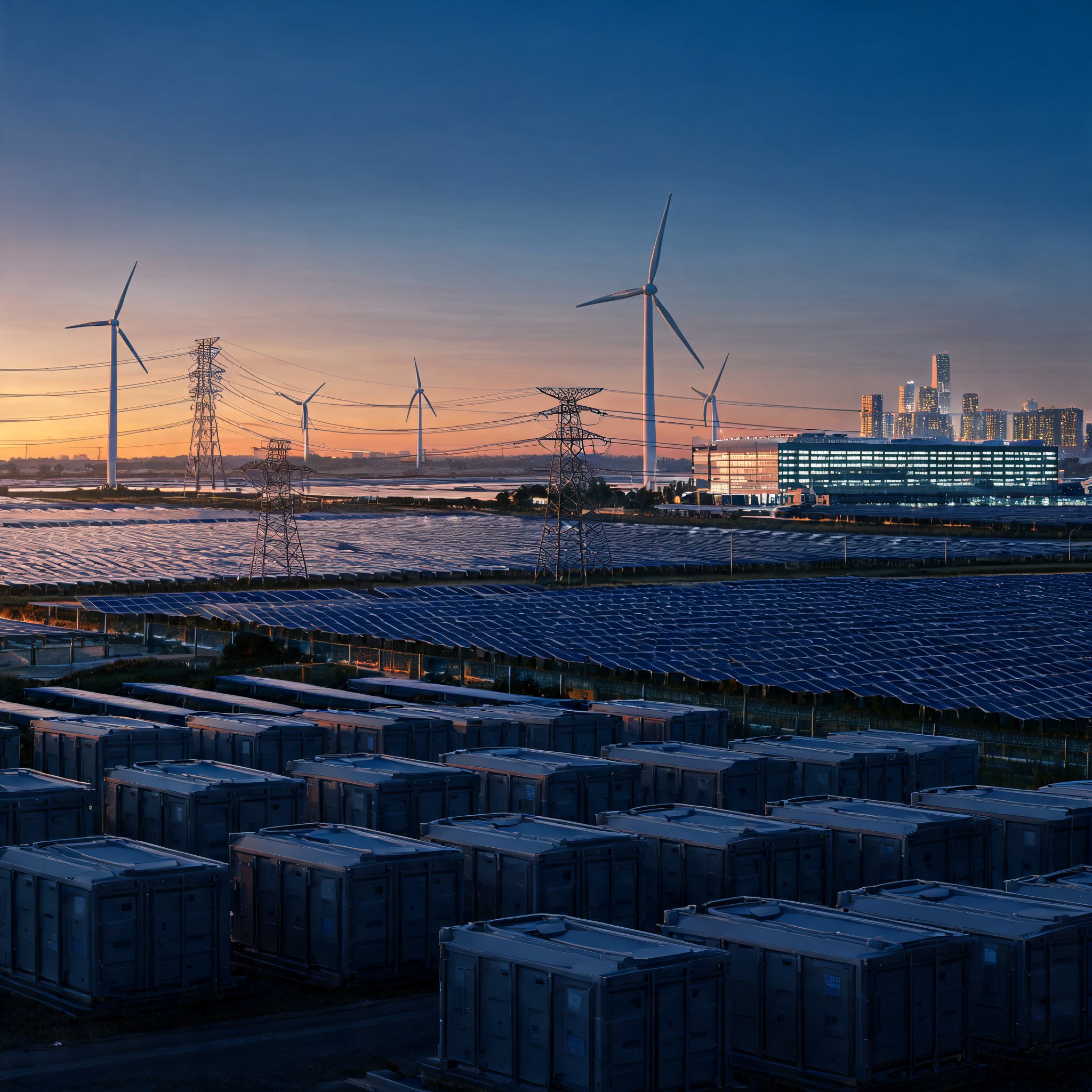
Solar Mounts argues that utility-scale solar, wind and battery storage can help close the gap on timelines many conventional projects cannot match. Suitable solar projects may be built within 18 months, depending on permitting, equipment and interconnection, while new nuclear facilities generally require substantially longer development periods, according to the commentary. Solar and wind reduce emissions when they displace fossil-fuel generation, and batteries store surplus electricity for periods of higher demand; actual emissions benefits depend on which generators are displaced and when electricity is delivered.
Parker also called for faster interconnection reviews so qualified solar projects do not remain in queues for years because of avoidable administrative delays. Better coordination among PJM, utilities, regulators, developers and state governments, along with necessary transmission upgrades, would bring capacity online sooner, the commentary said.
Land use and data-center demand
On land use, Solar Mounts said solar development and agriculture can coexist. Well-designed projects can include restoration plans that allow agricultural use to resume when leases end, and solar leases can provide farmers with supplemental income when crop prices fail to keep pace with production costs. Agrivoltaic systems combine electricity generation with compatible crops or livestock, while parking lots, commercial properties, brownfields, landfills and other underutilized sites can also host solar. Solar carports can provide electricity, shade and weather protection, and community solar can expand access for people unable or unwilling to install their own panels.
The company also said growing data-center demand, particularly in Virginia and other parts of PJM’s territory, is adding pressure to a constrained grid. Developers of new hyperscale facilities should demonstrate how they will secure adequate electricity and pay their fair share of supporting infrastructure, Parker wrote. Dedicated generation, renewable energy contracts, batteries, flexible demand and grid upgrades can all contribute. Requiring every facility to build a gas-fired peaker plant is not necessarily the best answer, he added, because gas turbines face equipment and supply-chain constraints and additional fossil-fuel generation carries emissions and operating costs. Existing facilities should also reduce peak demand where possible; energy efficiency remains one of the most immediate options.
Solar Mounts concluded that faster approvals, better grid planning and a serious commitment to adding generation and storage are needed before shortages worsen. Reliable electricity underpins the economy, jobs and daily life, the commentary said, and repeated emergency orders, rising capacity costs and greater reliance on high-emission generation are not sound long-term strategies.