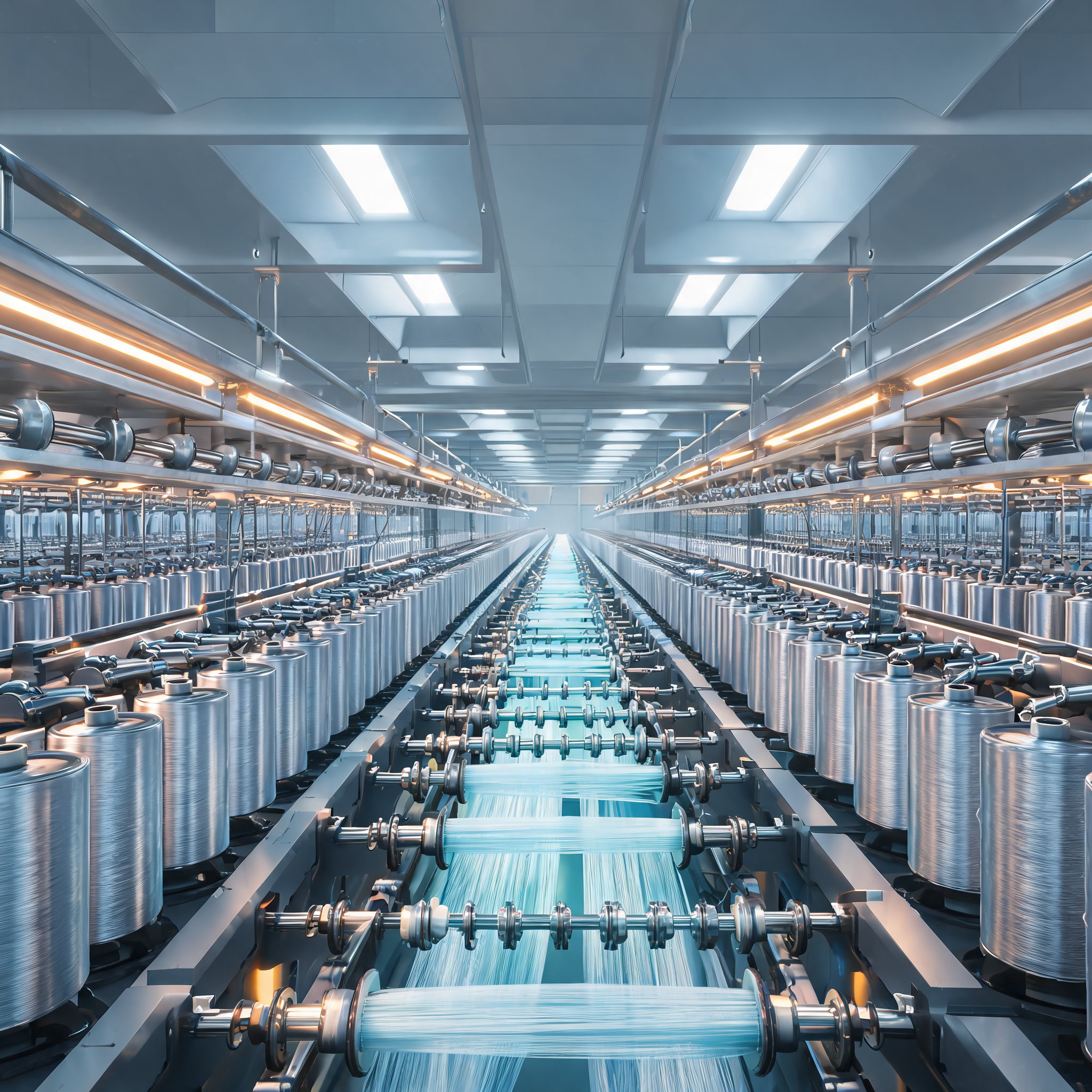
Barmag, a supplier of machinery for man-made fiber production, intends to strengthen its engagement with Bangladesh's textile industry. The company's portfolio covers filament spinning, texturing, BCF and staple fiber systems and nonwoven solutions, alongside polycondensation and extrusion systems and their key components, plus high-precision gear metering pumps used in textiles and in automotive, chemical and paint applications. André Wissenberg, Vice President and Head of Marketing, Corporate Communications and Public Affairs at Barmag GmbH & Co. KG, set out the company's reading of the global market and its plans.
A transforming global market
Wissenberg said the global textile machinery industry is undergoing significant transformation. Manufacturers face pressure from energy costs, sustainability requirements, labor shortages and the need to stay competitive in highly dynamic markets. At the same time, demand for high-quality man-made fibers continues to create opportunities, particularly where performance, consistency and cost efficiency are critical. Barmag sees potential in advanced polyester and polyamide production, recycled materials, technical textiles and increasingly automated manufacturing. Rather than supplying individual machines, the company aims to help customers optimize entire production processes by combining machinery, automation, digitalization and process expertise.
Energy efficiency and Bangladesh's energy challenge
Asked how Barmag's technology can help Bangladesh's textile sector, which is affected by the energy crisis, Wissenberg said reliable and affordable energy is a major concern and that manufacturers need every opportunity to improve efficiency. Barmag develops solutions intended to reduce specific energy consumption, increase production efficiency and minimize waste. Its eFK EvoSmart texturing machine combines heater technology and intelligent godet control and, depending on configuration and operating conditions, can reduce specific energy consumption by up to 25%. The POY 2.0 spinning concept uses a redesigned spinning beam that can reduce energy consumption by up to 10%, while improvements in process control and yarn quality help reduce waste. The atmos.io platform supplies production data and process transparency to help identify inefficiencies.
Wissenberg cautioned that energy-efficient machinery cannot compensate for an interrupted gas supply or an unreliable electricity grid. What it can do, he said, is help manufacturers use available energy more efficiently, lower energy costs per kilogram of yarn and strengthen competitiveness when production conditions allow.
Planned innovations for ITMA ASIA + CITME 2026
Barmag plans to present its portfolio at ITMA ASIA + CITME 2026 in Shanghai, scheduled for November 20–24 at the National Exhibition and Convention Center, at booth D45 in Hall 6.1. A key highlight is POY 2.0, whose WINGS POY 2.0 winder features a fully automatic string-up function designed to reduce operator intervention, shorten start-up times and minimize waste; the concept also includes a redesigned spinning beam and the EvoQuench 2.0 system. The company will also show eFK EvoSmart, with optimized process control, EvoHeater technology and Smart Godets, and the WINGS FDY FLEX winding concept, designed for a broad range of yarn types and rapid product changes including recycled polyester. Digitalization is represented by atmos.io, while the Neumag portfolio includes EvoSteam for staple fiber production, FiberGuard BCF for monitoring and process control in BCF yarn production, and hycuTEC for nonwoven applications.
Bangladesh plans
Wissenberg described Bangladesh as an important textile manufacturing country with a strong export-oriented industry and an established position in global textile and apparel supply chains. Barmag's approach covers the entire value chain, from continuous polycondensation, spinning and texturing to final bobbin handling, focusing on polyester and polyamide filament yarns as well as staple fiber and technical textile applications. The company plans to strengthen engagement through closer customer relationships, technical consultation and cooperation with local partners, with the stated objective of building long-term partnerships rather than simply selling machinery.