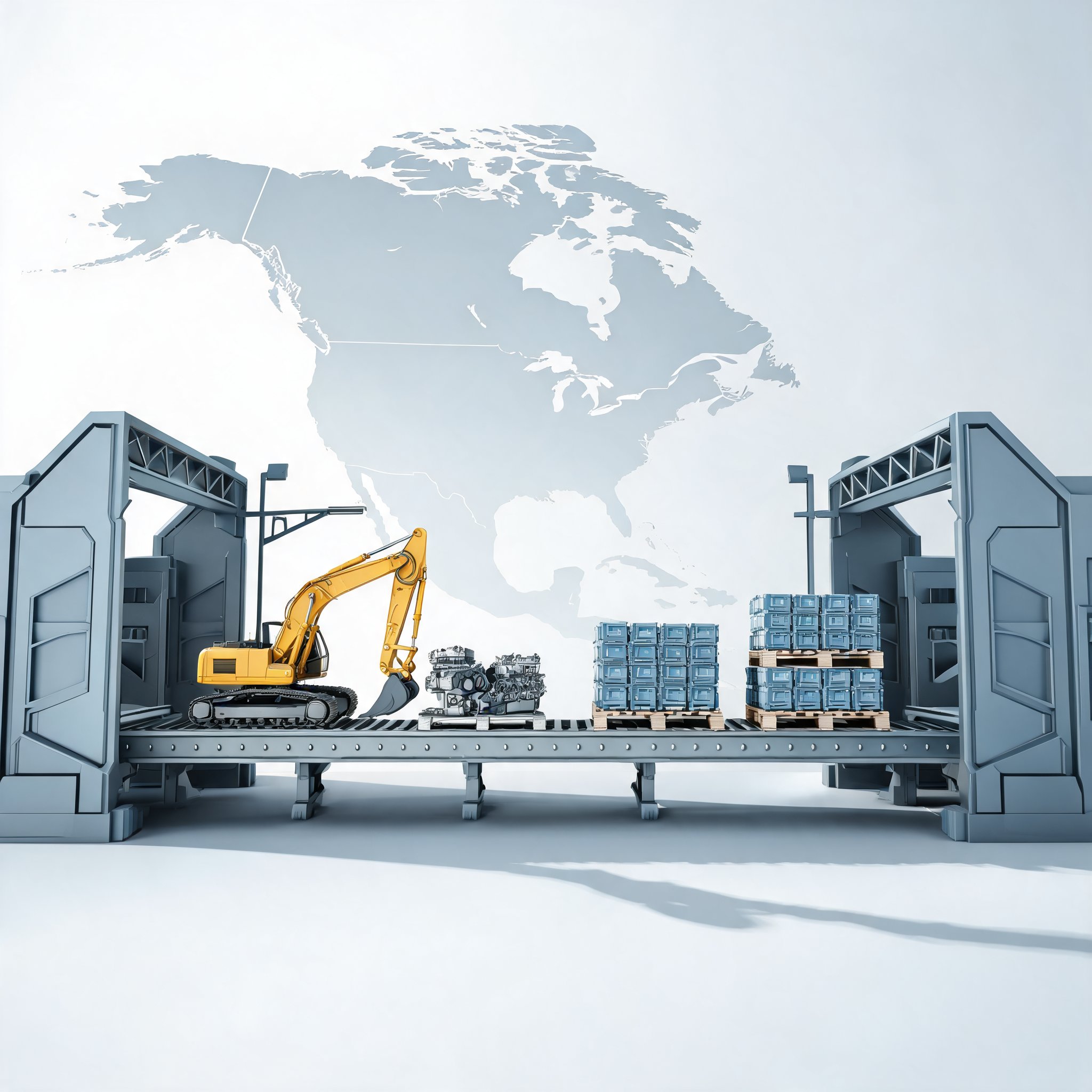
The Associated Equipment Distributors (AED) has called on the Government of Canada to make free and fair trade with the United States a top priority during the ongoing review of the Canada-United States-Mexico Agreement (CUSMA) and renewed negotiations with Washington.
The appeal came during the association’s annual advocacy day. AED said an integrated North American economy works for the sectors it serves, while tariffs imposed on either side of the border raise costs for farmers, contractors, miners and builders that Canada is relying on to grow the economy.
Brian P. McGuire, AED president and CEO, said the equipment used to build Canada is built, sourced and serviced on both sides of the border. Many components cross the border several times before a machine reaches a customer, he said, and each tariff—whether imposed by Washington or Ottawa—adds cost at every crossing. Those costs are ultimately paid by farmers, contractors and municipalities, and by Canadian families, according to McGuire.
AED said it was disappointed in August when the two countries could not reach a trade agreement, and has since increased advocacy on both sides of the border. In September, McGuire wrote to U.S. governors in states with significant exposure to Canadian trade, urging them to press for a return to the bargaining table. AED’s U.S. members have also met with more than 100 members of the U.S. House and Senate, while AED Canadian board member Brian Osterndorff recently presented the association’s case to the Senate of Canada.
McGuire said AED’s resolve remains strong. Equipment dealers and manufacturers in both countries agree that free and fair trade is the best path to prosperity for the sectors they serve, he said, and the association wants Canadian decision-makers to have the facts about what is at stake. AED is encouraging efforts to get both governments back to the table.
McGuire also linked trade stability to equipment purchasing. When customers cannot count on stable prices and stable trade rules, they delay purchases, he said. Those delays reduce work for technicians and hold back projects Canada needs, from housing and critical minerals to food production, according to McGuire.
AED’s recommendations
AED made several recommendations to Canadian policymakers:
- Seek tariff certainty and sector-specific relief. The association wants exemptions and clarified tariff relief for the heavy equipment industry in the CUSMA discussions, and it supports using all diplomatic channels to prevent new tariffs on equipment and components.
- Avoid retaliation that targets equipment. Tariffs and retaliatory tariffs on industrial goods hit Canadian farmers, contractors and resource producers first, AED said. Any Canadian response should be carefully targeted and should not penalize the equipment Canadians use to build and produce.
- Set clear, predictable rules for critical components. Engine parts, safety electronics and other specialized inputs often have no practical alternative supplier outside North America, according to AED.
- Work with industry and labour. AED recommends assessing the full impact of tariffs and developing contingency measures that safeguard Canadian jobs and investment.
- Build resilience at home. The association supports advancing critical infrastructure and skilled trades training so Canadian industries can invest with confidence.
McGuire said the sectors governments are relying on to build housing, develop critical minerals, strengthen energy security and feed Canadians all depend on reliable access to equipment and integrated North American supply chains. He described the equipment industry as an enabling industry and said it is ready to partner with government.